
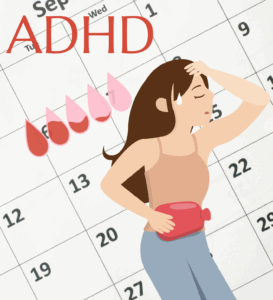
 It’s starting again…
….the moment you’ve been dreading all month. As if the breakout on your chin wasn’t enough of a warning, the bloating has made squeezing into your clothes feel like an Olympic event. You’re not sure what’s worse—the cramping, the lower back pain, the headache, or the exhaustion that’s hit you like a brick. The slightest roadblock could send you into tears, rage, or hysterical laughter—maybe all in unison. A choir of emotional chaos.
Everything just feels harder on your period: preparing meals, being productive, staying focused, getting out of bed—life in general. Getting started is hard enough, but switching tasks or directions feels nearly impossible. You’re forgetting even more than usual, and overall, you feel like a massive, irritable, inept mess.
But after a few days, things begin to settle. Within a week, you’ve practically forgotten about the hormonal hurricane. You’re back in action—focused, energized, organized. A productivity machine at the top of your game. Until… PMS creeps back in. The mood swings, the bloating, the emotional overload—and with them, a magnified wave of ADHD symptoms.
Why does this keep happening?
What’s the Deal with ADHD and Menstruation?
It all comes down to estrogen. This hormone helps regulate dopamine and other brain chemicals that impact ADHD, executive functioning, memory, and mood. When estrogen levels are high, your brain runs more smoothly. When they dip, you may experience increased distractibility, mood swings, memory lapses, and emotional dysregulation—especially if you have ADHD.
ADDitude Magazine breaks this down clearly, as does this explainer on how hormones and ADHD are deeply interconnected.
In short:
🔺 High estrogen = fewer ADHD symptoms
🔻 Low estrogen = intensified ADHD symptoms
How ADHD Shifts Throughout Your Cycle
Your menstrual cycle is a hormonal rollercoaster, and those fluctuations significantly affect your cognition and mood. These changes are natural—but with ADHD, they can feel especially disruptive.
The cycle is typically divided into two main parts:
- Follicular phase (first day of your period to ovulation)
- Luteal phase (after ovulation to the start of your next period)
Each lasts about two weeks.
🔹 Follicular Phase
This begins on the first day of your period. Estrogen is low, and ADHD symptoms often flare—along with the usual cramps, fatigue, and low mood.
As your period ends, estrogen steadily rises. That brings a boost of clarity, energy, and motivation. ADHD medication tends to work better during this time, and tasks feel more manageable.
But if your ADHD includes impulsivity or hyperactivity, this surge in dopamine and estrogen might increase risky or thrill-seeking behavior, not just productivity. Awareness of your specific patterns can help you manage this more effectively.
🔸 Luteal Phase
Following ovulation, estrogen and dopamine dip again—and your ADHD symptoms may come roaring back. Focus fades. Emotions intensify. Memory glitches become more frequent. As this article points out, this is often the most challenging time for attention and mood regulation.
ADHD meds may feel less effective—or oddly too strong depending on where you are in your hormonal rhythm. That’s why tracking your cycle can be so helpful. It lets you fine-tune your meds, routines, and coping strategies to work with your biology instead of against it.
What If You’re in Perimenopause or Menopause?
Welcome to your f*!k-it 40s and 50s—when you finally stop caring what others think… but discover a whole new level of hormonal havoc.
Sure, your tolerance for BS is gone (yay), but so is your tolerance for frustration, noise, clutter, or your partner chewing. Sound familiar? That’s because estrogen levels begin to fluctuate wildly during perimenopause, often dropping lower than ever—and staying there in menopause. Symptoms that used to show up once a month during PMS might now be your daily companions.
So how do you tell if it’s perimenopause or ADHD? Are your ADHD symptoms getting worse—or are your hormones just in freefall?
It’s probably both. But here’s what you can do:
- Track your cycle and symptoms to spot patterns
- Talk to your doctor about whether medication, hormone replacement therapy, or both might help
- Add mindfulness and structure into your routine to lower stress and improve emotional regulation
- Prioritize sleep, movement, and rest like it’s your full-time job
You Are Not Broken—You’re Just Human
Your ADHD and estrogen levels don’t define you—but they do impact you. And once you understand how they interact, you can start adapting your life accordingly.
That might mean adjusting your treatment plan, tweaking your routines, asking for help, or simply giving yourself more grace. The more you understand your brain and body, the more empowered you are to shape your environment to support your needs.
This isn’t about control—it’s about compassion. It’s about noticing shifts, learning what helps, and honoring what’s hard. You’re not alone. You’re not failing. You’re changing.
And intentional change – that’s adapting, and that is powerful.
Angela Langer, MSW, LICSW
Psychotherapist and Women’s ADHD Specialist


📚 References
- McCoy, A. (2024). Menstruation Hormones. Everyday Health.
- Kurbatova, O. (2020). Menstruation Cycle Calendar. Getty Images.
- Matlen, T. (2023). Perimenopause Problems: How Changing Hormones Exacerbate ADHD Symptoms. ADDitude.
- Pesantez, N. (2024). Menstrual Cycle Phases and ADHD: Why Cycle Syncing Is Essential. ADDitude.
- Skoglund, L. B. (2024). The Menstrual Cycle Impacts ADHD Symptoms in Disparate Ways. ADDitude.
- Spencer, C. (2021). Menopause Transition. My Menopause Center.
- Wasserstein, J. (2024). Menopause, Hormones & ADHD: What We Know, What Research Is Needed. ADDitude.

